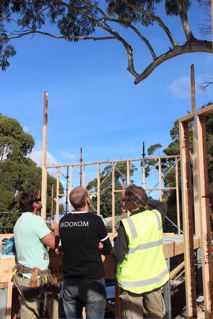
Nathan (left), Ian and Doug discuss options and the decision is made to seek professional advice from arborist Andy Angliss. (Courtesy Elise Simondson)
Protecting and caring for the existing flora on this block, especially the mature trees, is a central part of the project. In fact, as About the project explains, the house is designed by architects David and Uta Green to wrap around the two major gum trees.
Making decisions based on advice from people who know what they’re doing is a good approach, in life and in building. So Saturday’s meeting with arborist Andy Angliss to discuss the Eucalyptus viminalis (white gum) limb and associated branches encroaching on the planned height of the art studio roof is invaluable.
Another arborist had trimmed some branches off the mature Eucalyptus pulchella (peppermint gum) a bit higher on the hill that would have made building the two-storey structure impossible, but with this set of limbs we thought there were a number of options other than lopping, as outlined in the last post on this subject.
But Andy, a total professional when it comes to caring for trees, told us the limb should in fact largely come off. He pointed to the significant ripples on the underside of the junction where the main limb joined the trunk, which he said was clear evidence of the physical stresses on the tree from such a long, large and heavy limb coming off horizontally from the trunk.
By removing much of that horizontal limb and the outer 3 of 4 vertical branches, the tree would be much healthier and its life would be significantly prolonged, he said. So a compromise was made to do just that, as well as to lower the roof pitch from 12 to 11 degrees to give both the remaining limb and the roof some room.
Wednesday, Day 55, Andy safely – and deftly – trims the tree. After doing the main work, he goes on to remove the deadwood on the tree, which he had explained on Saturday is the main source of danger to the health of all trees, as it is a source of food for tree-destroying insects and for pathogens to attack an otherwise healthy tree.
So up he goes, using modern methods that minimise any impact on the tree. The days of spikes in tree trunks are well and truly over!
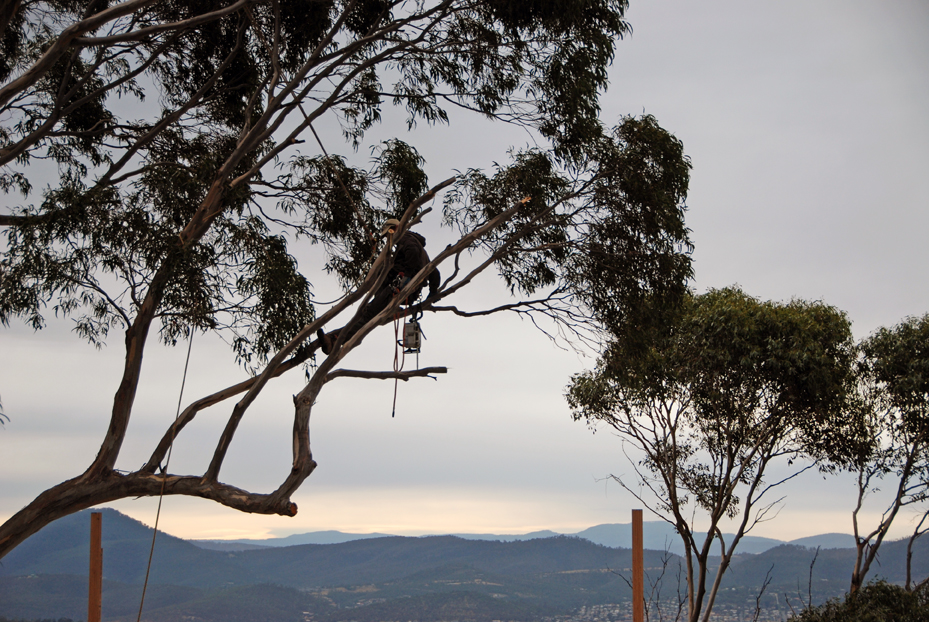
Ropes, gloves and foot, hearing and eye protection are central to safe outcomes.
 Andy uses the tree itself to stay safe. Being suspended from above and also attached laterally by other ropes minimises the risk of the pendulum effect.

Aside from ropes and other safety gear, a finely honed sense of balance seems to come in very handy too. Andy says he loves to keep trees healthy and to make them look beautiful. He doesn’t seem to mind a bit of exercise either, even as he uses the laws of physics to best advantage.

Rapid progress from another angle.

And from another. By attaching himself between the high point and the lower point, even if he slips, it will be quite easy to regain his position after a very short fall. But skill and experience mean that even short falls are very, very rare.
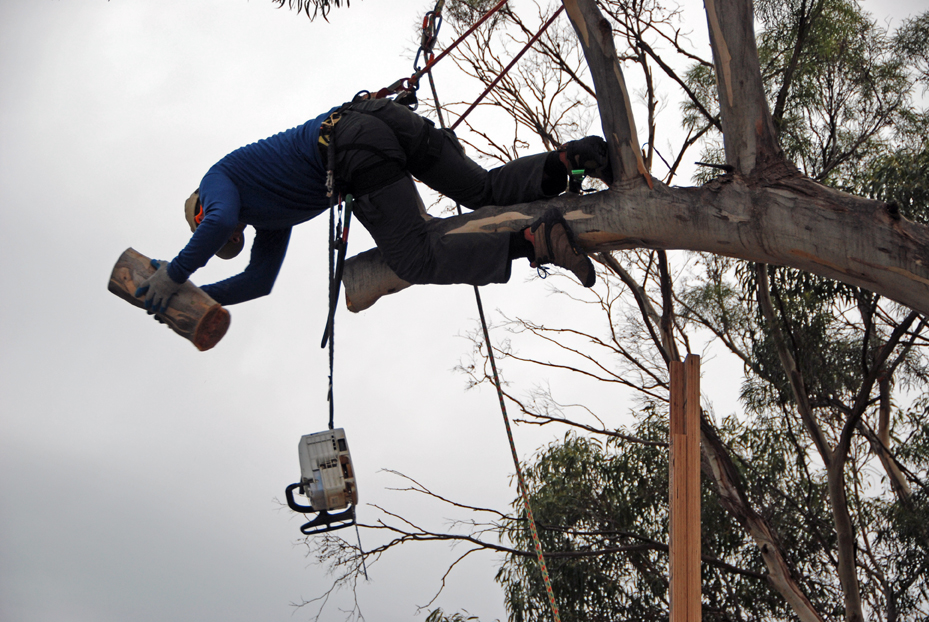
Andy probably never felt any need to run away and join the circus for adventure.
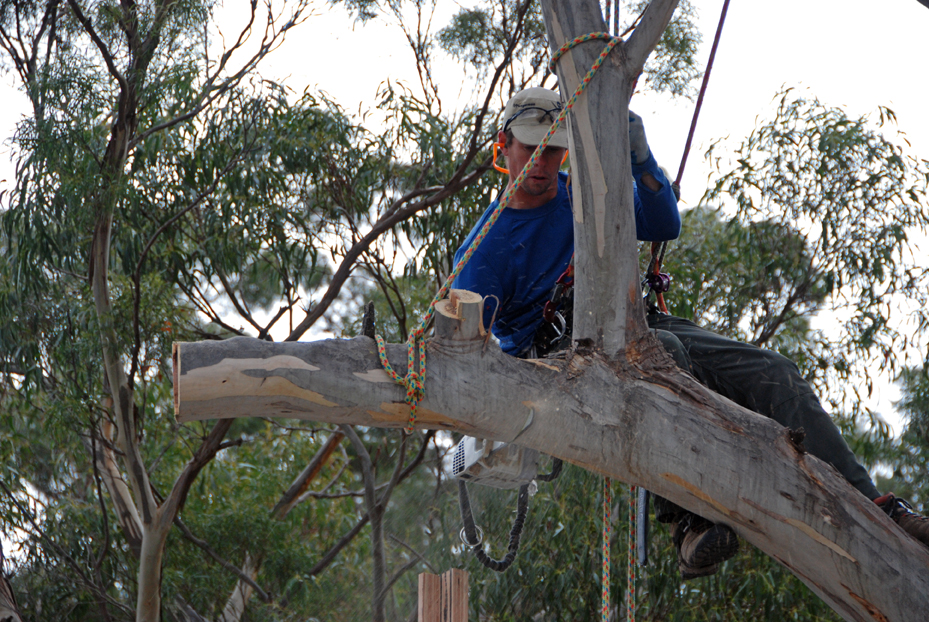
The final cut occurs in the narrow taper, which will allow the tree to seal the wound over time. Cutting any closer to the remaining vertical branch would mean the wound might never seal properly, giving insects and pathogens the meal of a lifetime. Using a qualified professional prevents the unintentional damage that an amateur can inflict.
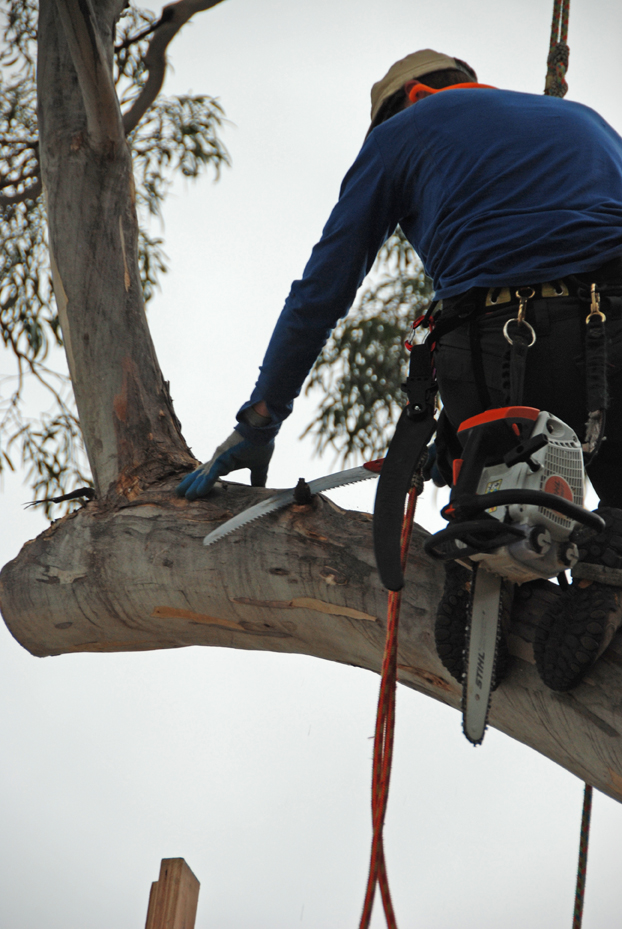
Time for clean-up of the rest of the tree. Even small bits of deadwood need to be removed to keep a tree healthy.
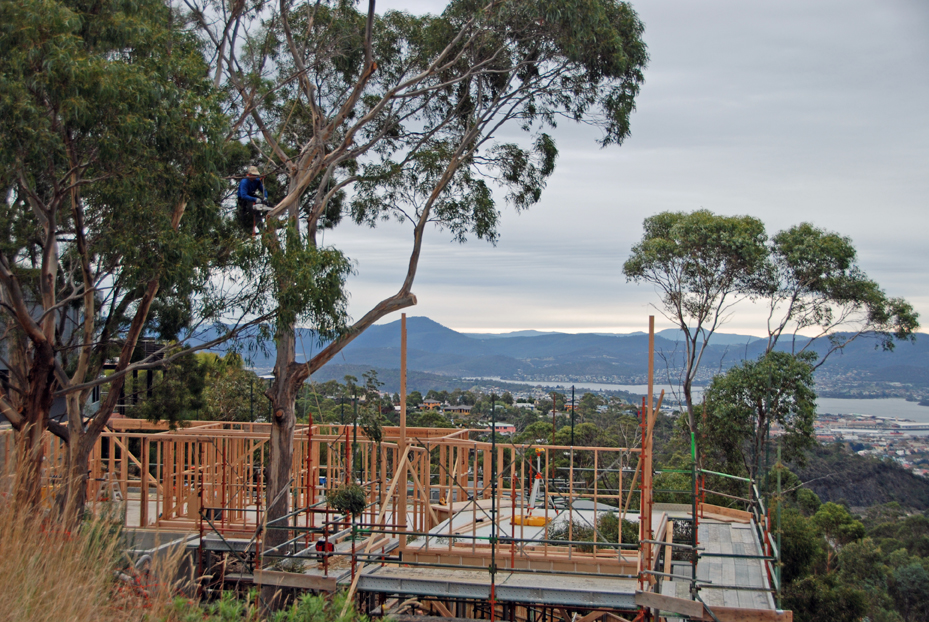 Scroll up to compare the before and after. From this angle – one of many – the tree retains its grace and beauty and will do for many years to come. As your blogger leaves to return to work, he makes a quick detour to photograph another approach to preparing to build a house a few hundred metres up the road.
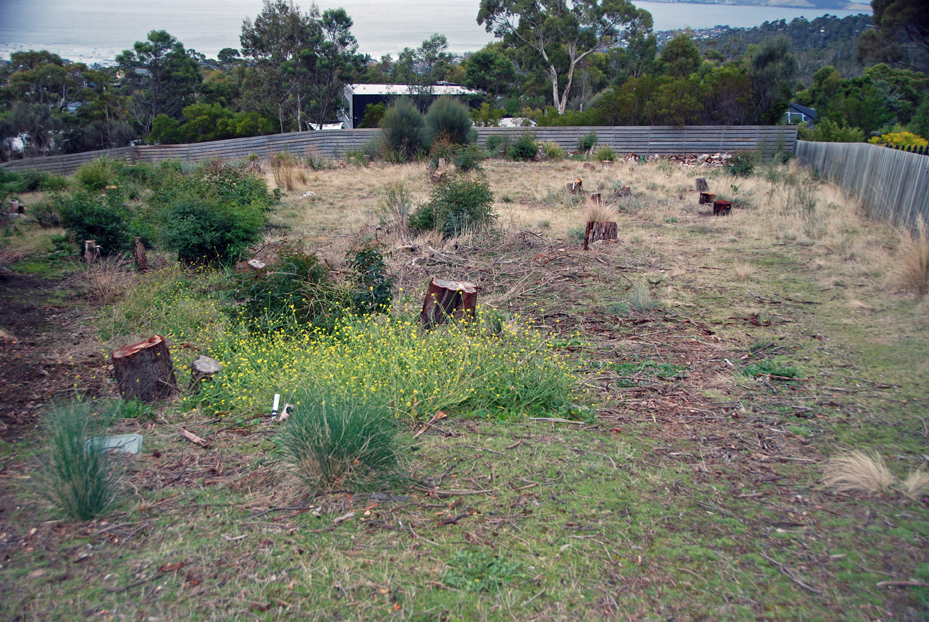
On the northern tip of Tolmans Hill, a landowner has acted differently. At least 15 tree stumps are clearly visible. When your blogger sees this kind of thing, a few questions come to mind: Is this necessary? Is this right? Is this legal? Is this intelligent?
One could imagine a conceited explanation combining ‘the view, the view’ and ‘efficiency, efficiency, when building’ with ‘there’s a bushfire danger, so the trees have to go’. A significant fine from the local council may result. But the damage is done unless the practical remedy is to require mature replanting.
Nature will have its revenge on this, the most exposed and windiest part of Tolmans Hill. Humans have known and acted for thousands of years on the understanding that trees break some of the force of the wind. Their presence improves, among other things, our quality of life. But some people only learn the hard way.
It’s not possible to end this post on a high note after seeing a scene like that.
In a future post, we’ll examine our bushfire risk and the measures to be taken to respond.


 Hobart hill house
Great solution & great images that tell the story!
Thanks Jill. I feel privileged to have witnessed this and to have been part of the decision-making process. Andy is used to being closely watched, by the way. Children in particular are fascinated, he said. I’m thrilled that we found yet another highly skilled person who takes pride in their work and delights in making things beautiful.
Great work Doug. Wonderful project to see your place coming together . Xx
Thanks Agnes!